How to Prepare Walls for Painting: Expert Guide
Most paint jobs that fail early were not let down by the paint. They were let down by what happened, or didn’t happen, before the paint went on. Knowing how to prepare walls for painting properly is what separates a finish that looks good for years from one that starts peeling, bubbling, or cracking within months.
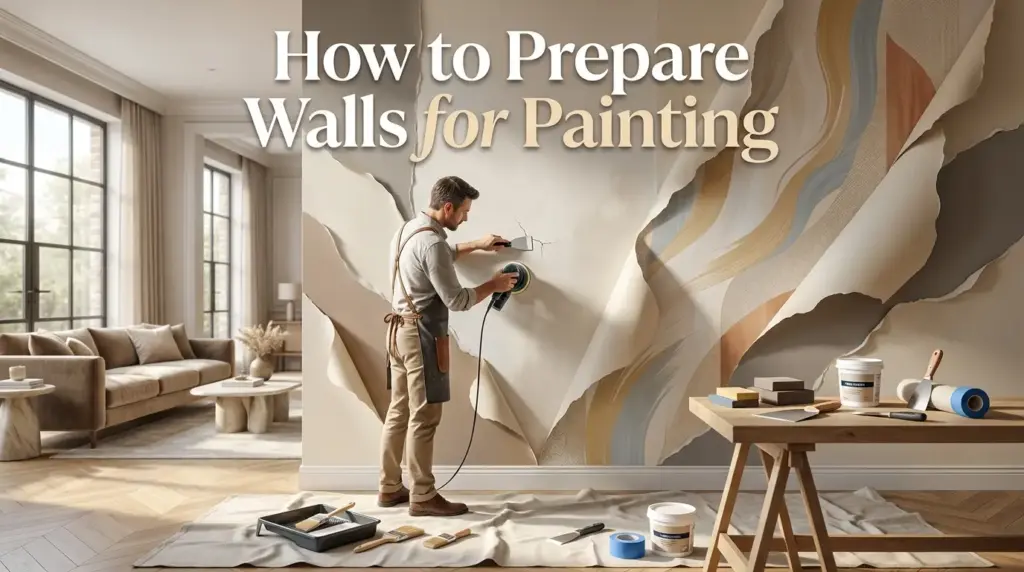
This guide covers every step of wall preparation before painting, from clearing the room to applying primer, including the parts most DIY guides skip. Whether you are refreshing interior walls or repainting the exterior of an older Melbourne home, the process is the same: preparation first, paint second.
Why Wall Preparation Before Painting Matters
Paint is not a filler, a sealer, or a substitute for surface repair. It is a coating that bonds to whatever is underneath it. If the surface underneath is dusty, greasy, cracked, or poorly patched, the paint will reflect that and eventually fail.
Bubbling, flaking, uneven coverage, and paint that peels away in sheets are almost always the result of skipped or rushed preparation. A premium paint applied to a poorly prepared wall will still fail. A mid-range paint applied to a properly prepared surface will outperform it every time. That is why professional painters spend more time on prep than on painting itself.
What You Will Need
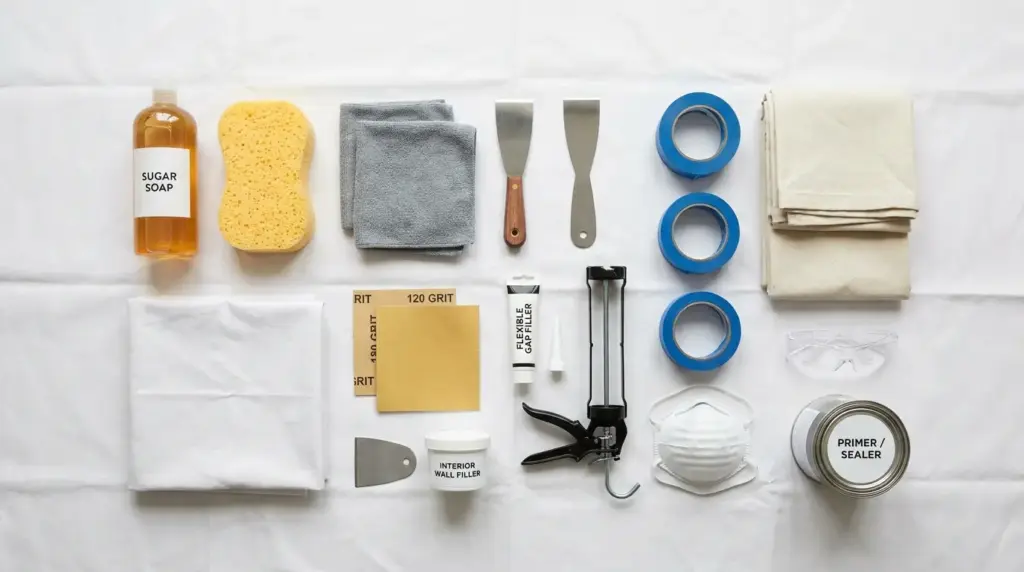
Before you start, gather the following:
- Sugar soap and clean cloths or a sponge
- Paint scraper or putty knife
- Sandpaper (120-grit and 180-grit) or a hand sander
- Selleys Spakfilla Rapid or equivalent interior wall filler
- Flexible gap filler and caulking gun
- Drop sheets
- Painter’s tape
- Dust mask and safety glasses
- Primer or sealer suited to your wall surface
Step 1: Clear and Protect the Room
Before any prep work begins, remove everything you can from the room. Take down wall art, remove power point and light switch covers, and move furniture away from the walls. Anything that cannot be moved should be covered with drop sheets.
Lay drop sheets across the floor before you start scraping or sanding, dust and debris will fall, and protecting the floor now saves a cleanup problem later. This is a step that is easy to skip and easy to regret.
Step 2: Check for Lead Paint in Older Homes
This step applies specifically to Australian homes built before 1970, and it is the one most DIY guides fail to mention. Lead-based paint was commonly used in Australian homes up until the late 1960s, and it is still present on walls and trims in many older Melbourne properties.
If your home was built before 1970 and has not been fully stripped and repainted since, assume there may be lead paint present on the walls. Sanding or scraping lead paint releases fine dust that is hazardous to inhale. Before starting any prep work on an older home, test the surface with a lead paint test kit, available from most hardware stores. If lead paint is confirmed, use wet scraping methods to minimise dust, wear a P2 respirator, and check current guidance from your state health authority before proceeding.
Step 3: Clean the Walls Thoroughly
Clean walls are non-negotiable. Dust, grease, cooking residue, handprints, and airborne grime all create a barrier between the paint and the wall surface. Paint applied over dirty walls will not bond properly, and the contamination will show through the finish.
Mix sugar soap with warm water according to the packet directions. Using a clean cloth or sponge, wash the walls from top to bottom in sections. Pay extra attention to kitchens, hallways, areas around light switches, and any wall near a vent or exhaust fan, these collect the most grease and grime.
Once cleaned, wipe the walls down with clean water to remove any sugar soap residue, then allow the surface to dry completely before moving on. Applying filler or primer to a damp wall causes adhesion problems and can lead to bubbling down the line.
Step 4: Scrape Off Flaking and Loose Paint
On previously painted walls, any paint that is already lifting, cracking, or flaking needs to come off before you do anything else. Painting over loose paint traps the problem underneath; the old paint will continue to detach, pulling the new coat with it.
Hold a paint scraper at roughly 45 degrees and work over the surface to remove any loose material. Focus on areas around window frames and door architraves, near skirting boards, and anywhere you can see cracking or bubbling. You do not need to strip the entire wall; only remove what is genuinely loose. Once done, lightly sand the edges of any scraped areas so they blend into the surrounding surface rather than leaving a hard step.
Step 5: Fill Holes, Cracks, and Dents
This is the step that has the biggest visible impact on the finished result. Every hole, crack, dent, and imperfection in the wall surface will show through paint, often more visibly than before you painted, because the sheen of fresh paint highlights surface irregularities that were previously hidden.
Use a quality interior wall filler such as Selleys Spakfilla Rapid for small holes and cracks. Apply it with a filling blade, pushing it firmly into the defect and skimming in both directions to remove excess and eliminate air pockets. Allow it to dry fully, usually around 30 minutes for shallow fills, then sand smooth with 120-grit sandpaper until the patch is flush with the surrounding wall.
For deeper holes or damaged plaster, a second application of filler may be needed once the first coat has dried and shrunk slightly. Do not try to fill a deep hole in one pass; it will crack as it dries.
For hairline cracks in plaster, particularly common in Melbourne homes built in the 1960s and 70s, widen the crack slightly with a scraper before filling. Filling a hairline crack without opening it first means the filler sits on the surface rather than inside the crack, and it will reappear through the new paint within months.
Step 6: Seal Gaps Around Skirting Boards and Architraves
Gaps between walls and skirting boards, door frames, and window architraves are one of the most commonly missed steps in wall preparation before painting. These gaps are visible in a finished room, and they create an edge that collects dust and looks unfinished.
Apply a flexible gap filler using a caulking gun, holding it at 45 degrees and running a consistent bead along the joint. Smooth the bead with a damp finger or cloth. Use a flexible product rather than a rigid filler for these joints, skirting boards and architraves move slightly with changes in temperature and humidity, and a rigid filler will crack within months. Allow the gap filler to cure fully before painting.
Step 7: Sand the Walls
Sanding serves two purposes in wall preparation: it smooths out any patches, filled areas, and rough spots, and it lightly scuffs previously painted or glossy surfaces so the new coat has something to bond to.
Once all filler and gap filler have dried, sand filled areas with 120-grit sandpaper until smooth, then follow with 180-grit for a finer finish. On previously painted walls with a semi-gloss or gloss finish, common on trims, doors, and kitchen or bathroom walls, give the entire surface a light sand to dull the sheen. Paint bonds poorly to glossy surfaces, and skipping this step is one of the most common reasons topcoats peel on these areas.
After sanding, wipe the walls down with a damp cloth or tack cloth to remove all sanding dust before moving to primer. Dust left on the surface will mix into your primer and topcoat and create a gritty, uneven finish.
Step 8: Apply Primer
Priming is not optional, and it is not just for new plaster. Primer seals the surface, evens out porosity between patched and unpainted areas, improves paint adhesion, and gives the topcoat something consistent to bond to across the whole wall.
Use a sealer-primer on new or bare plasterboard. On previously painted walls with significant patching, a spot-prime overfilled areas at a minimum will prevent the patches from showing as dull spots through the topcoat, a problem known as flashing. On walls with water stains, smoke stains, or mould-affected areas that have been treated, use a stain-blocking primer to seal these areas before topcoating.
On exterior surfaces, the primer choice becomes even more critical. A mould-resistant primer is important on south-facing walls or any surface prone to damp, and the primer should be compatible with your chosen topcoat.
Step 9: Apply Painter’s Tape
Once the primer is dry, apply painter’s tape along trims, window frames, door architraves, and ceiling lines. Press the tape edge down firmly to prevent paint bleeding underneath. Running a putty knife along the edge is a quick way to ensure good contact.
Remove the tape while the paint is still slightly tacky rather than fully dry. Pulling tape off fully cured paint can lift the edge of the topcoat, particularly on glossy surfaces.
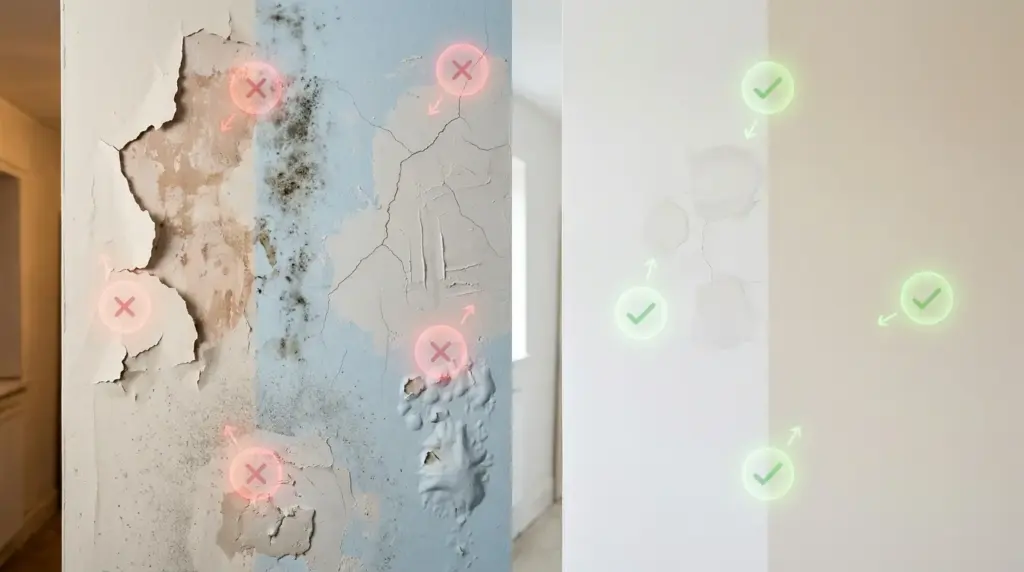
Common Mistakes to Avoid When Prepping Walls for Painting
When to Call a Professional
Wall preparation before painting is straightforward on most surfaces, but there are situations where professional help is the right call. Lead paint in older homes, active mould growth that suggests an underlying moisture problem, significant plaster damage, or exterior surfaces with years of built-up paint layers all need assessment and handling by an experienced painter. Attempting to paint over these problems without addressing them properly will produce a result that fails quickly and costs more to fix than getting it right the first time.
If you are in Melbourne and want a proper assessment before your next paint job, get in touch with Gold Premium Coatings for a free on-site quote.